
 1
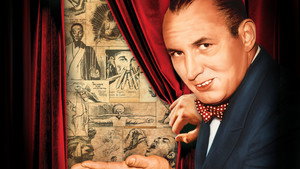
Ripley: Believe It or Not
Robert Ripley's obsession with the odd and keen eye for the curious made him one of the most successful men in America during the Great Depression. Over three decades, his Believe It or Not! franchise grew into an entertainment empire, expanding from newspapers to radio, film and, ultimately, television. Americans not only loved his bizarre fare, but were fascinated by the man himself, and the eccentric, globetrotting playboy became an unlikely national celebrity. This is the story of the man who popularized the iconic phrase, and proof of why we still can’t resist his challenge to “Believe it — or not!”
 2
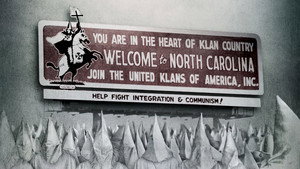
Klansville, USA
The rise of the Ku Klux Klan in North Carolina during the 1960s is recalled. In 1963, Bob Jones Sr. started the state's chapter for the racist organization, and grew its membership to more than 10,000 within three years. Included: remarks from sociologist David Cunningham, whose book "Klansville, USA" the documentary is partially based on; historians David Cecelski and Gary Freeze; the Southern Poverty Law Center's Mark Potok; and journalist Patsy Sims, author of "The Klan."
 3
Edison
EDISON explores the complex alchemy that accounts for the enduring celebrity of America's most famous inventor, offering new perspectives on the man and his milieu, and illuminating not only the true nature of invention, but its role in turn-of-the-century America's rush into the future.
 4
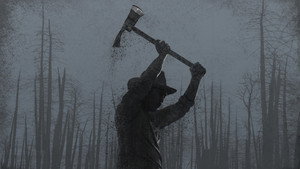
The Big Burn
In the summer of 1910, hundreds of wildfires raged across the Northern Rockies. By the time it was all over, more than three million acres had burned and at least 78 firefighters were dead. It was the largest fire in American history.
 5
The Forgotten Plague
By the dawn of the 19th century, the most deadly killer in human history, tuberculosis, had killed one in seven of all the people who had ever lived. Throughout the 1800s, the disease struck America with a vengeance, ravaging communities and touching the lives of almost every family. The battle against the deadly bacteria had a profound and lasting impact on America. It shaped medical and scientific pursuits, social habits, economic development, western expansion, and government policy. Yet both the disease and its impact are poorly understood; in the words of one writer, tuberculosis is our "forgotten plague."
 6
Last Days In Vietnam
The North Vietnamese Army was nearing Saigon and the South Vietnamese resistance was at a low. Nearly 5,000 Americans still needed to remove from South Vietnam, but their South Vietnamese allies, co-workers and friends would be captured by the North Army if they where left behind. Many of these South Vietnamese people were able to escape with the help of a number of memorable Americans, who, unsanctioned, managed to complete operations that saved many of the South Vietnamese.
 7
Blackout
First responders, journalists, shop owners, those inside the pressure-packed control center of Con Edison on West End Avenue, and other New Yorkers tell about what happened when the lights went out on July 13, 1977
 8
Walt Disney Itinéraire D'un Génie (1ère Partie : Les Premiers Pas D'un Génie)
La vie complexe et l'héritage du cinéaste emblématique Walt Disney, qui a créé Mickey Mouse et réalisé "Blanche Neige", le premier long métrage d'animation.
- 9
Walt Disney Itinéraire D'un Génie (2ème Partie : L'homme qui a fait rêver l'Amérique)
La deuxième partie de ce documentaire (1941-1966) continue d'explorer la vie et l'héritage durable de Walt Disney, qui réalise des films tels que Cendrillon et Mary Poppins et réalise son rêve, Disneyland. Avec le début de la Seconde Guerre mondiale, le financement des longs métrages s'épuise et le studio vacille. Lors de la sortie de Bambi en 1942, les critiques sont mitigées et le film n'est aussi rentable que prévu. La société est confrontée à une montagne de dettes. Bientôt, une autre vague de protestation a lieu à Hollywood et les chefs de studio sont déterminés à riposter.
 10
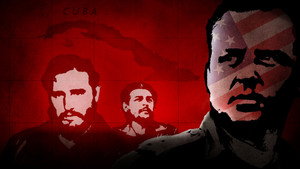
American Comandante
When William Morgan was executed outside a Havana prison on March 11, 1961, his strange story seemed to vanish from the popular imagination as quickly as it had appeared; it was lost in the classified archives of the Cold War and edited out of Cuban history by Fidel Castro’s retelling of the revolution.
 11
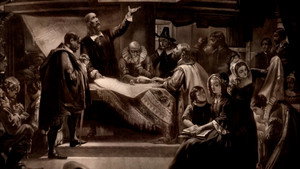
The Pilgrims
The challenges the Pilgrims faced in making new lives for themselves still resonate almost 400 years later: the tensions of faith and freedom in American society, the separation of Church and State, and cultural encounters resulting from immigration. Staring: Roger Rees (1944 - 2015) as William Bradford in his final Television appearance.