 1
The Spree Forest
The documentary tells of this unusual habitat, which is heavily influenced by humans and yet is close to nature. The village of Lehde, which is crossed by numerous ditches, hidden under shady trees and full of picturesque corners, is considered to be the most attractive Spreewald idyll. There are a few courtyards in this water labyrinth, many of which can only be reached by boat today. When winter arrives, ice connects the islands in the Spreewald. The canals and waterways become comfortable walking and driving routes for days or weeks - anyone who has ever laboriously loaded or unloaded a boat appreciates the help of winter. And it is an unforgettable experience to experience the extraordinary river landscapes of the Spreewald on ice skates or toboggans. Christoph Hauschild sensitively stages the unique river landscape of the Spreewald.
 2
North Friesland
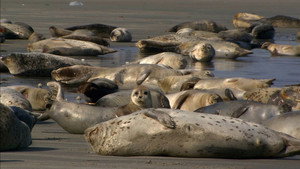
The water comes and goes twice a day on the coast of North Friesland in the far north of Germany. At low tide it exposes the Wadden Sea. This is 40 kilometers wide in places and is home to ten times more animals than other seabeds. Countless small animals - shrimp, sand crabs and cockles - in turn attract large flocks of birds. The Schleswig-Holstein Wadden Sea is part of the largest national park in Germany and has been part of the UNESCO World Heritage since 2009. The Halligen are unique in the world. There are ten of them, all located in the North Frisian Wadden Sea, often only accessible by lorry or ship. Unlike islands, Halligen are flooded several times a year and are still inhabited. The North Frisians built their settlements here on so-called mounds. These are hills that lie above the water surface even during storm surges. Life on the Halligen is more leisurely than on the mainland.
 3
The Black Forest
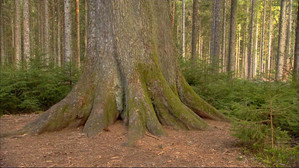
The Black Forest is known worldwide for its cuckoo clocks and Black Forest cake. But the region has much more to offer: in the mountain forests there is silver fir, up to 60 meters high - a European record. One last impressive giant tree in the northern Black Forest is the 230-year-old, so-called grandfather fir, which towers over all the treetops in the area with a trunk circumference of 1.65 meters and a height of 45 meters. The capercaillie lives hidden in sparse old growth. The extremely shy birds are threatened with extinction due to the destruction of their habitat, climate change and growing tourism. A few lynxes and wildcats from the neighboring Vosges and Swiss Alps have recently been sneaking through the Black Forest again. Eradicated here in the last century, the two cat species return to their ancestral habitat almost unnoticed. There are also alpine animals and plants in the Black Forest that survived the Ice Age at rough altitudes for thousands of years.
 4
Western Pomerania coast
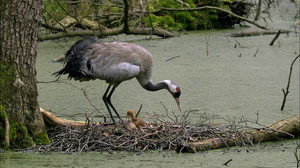
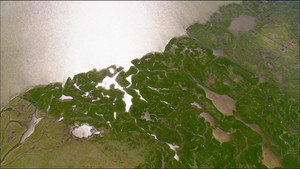
One of the most beautiful natural landscapes in the country lies on the Baltic Sea in north-eastern Germany. The chalk cliffs on the island of Rügen rise almost 120 meters into the sky and offer breeding opportunities for the rare peregrine falcon. In the beech forests of Jasmund on the edge of the white cliffs, badgers and fallow deer raise their young. The lagoons, known as Bodden, are among the most species-rich regions in Western Pomerania. They are only connected to the Baltic Sea by narrow straits and provide nesting and resting places for a large number of birds. In autumn, up to 60,000 cranes rest in the region where white-tailed eagles also hunt. In the Darsser Jungle, deer come to the dune belt of the beaches. There the bulls fight bitterly during the rut; a sight that can only be seen on the coast of Western Pomerania. In the shadow of the Dornbusch lighthouse on the island of Hidden sea lies one of the few colonies of little terns in the Baltic Sea.
 5
Les préalpes bavaroises
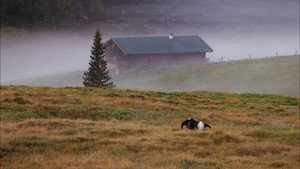
Dans les Préalpes bavaroises, les blocs détachés des glaciers et les moraines ont créé des paysages insolites et humides, où se réfugient les oiseaux avides d’eau, tels que martins-pêcheurs d’Europe, cincles plongeurs, butors étoilés, ibis chauves, busards des roseaux ou rossignols des rivières. Le triangle formé par le lac Ammer, les marécages près de Murnau et les lacs Osterseen dispose d’un réseau hydrographique exceptionnel de rivières souterraines. Dans les Préalpes bavaroises, les blocs détachés des glaciers et les moraines ont créé des paysages insolites et humides, où se réfugient les oiseaux avides d’eau : martins-pêcheurs d’Europe, cincles plongeurs, butors étoilés, ibis chauves, busards des roseaux ou rossignols des rivières.
 6
Saxon Switzerland
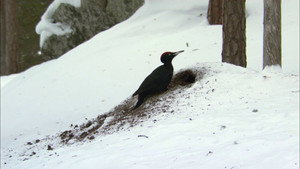
Deep river valleys and desert-like rock plateaus - Germany's "Grand Canyon" is Saxon Switzerland. Wind and water, heat and frost created the unique landscape of the Elbe Sandstone Mountains over millions of years. Rare animals such as garden dormouse, peregrine falcons and black storks have adapted to life on and between the sandstone cliffs. With extraordinary shots, this film portrays one of the greatest German natural wonders.